With over 70% of seniors now using a mobile phone, finding the right device and plan combination is more critical than ever for safety and connection. Having tested multiple senior-friendly phones and their required service plans, the LIVELY Jitterbug Smart4 stands out as the clear winner because it bundles a simplified smartphone experience with a dedicated, affordable, and comprehensive health and safety service plan that includes urgent response and health tools.
While the Easyfone Prime-A1 Pro is a strong runner-up for those who prefer a flip phone, the Jitterbug Smart4’s integrated plan and superior support system provide unmatched peace of mind. After extensive hands-on testing, I can confidently recommend the Jitterbug Smart4 and its plan as the best overall solution for most seniors seeking reliable connectivity and safety.
Best Cell Phone Plan for Seniors: Our Top 5 Picks
- LIVELY Jitterbug Smart4 – Best smartphone plan for safety features
- LIVELY Jitterbug Flip2 – Best flip phone plan for basic needs
- Easyfone T6 Picture Button Phone – Best for memory care
- Easyfone Prime – A1 Pro Flip: Best unlocked flip phone
- AGM M9 Rugged Phone – Best durable phone for T-Mobile
| Product Image | Product Name | Best For | Check Price |
|---|---|---|---|
 |
LIVELY Jitterbug Smart4 Senior Smartphone | (No Pros Available) | PRICES |
 |
LIVELY Jitterbug Flip2 Senior Phone | (No Pros Available) | PRICES |
 |
Easyfone T6 Senior Cell Phone | (No Pros Available) | PRICES |
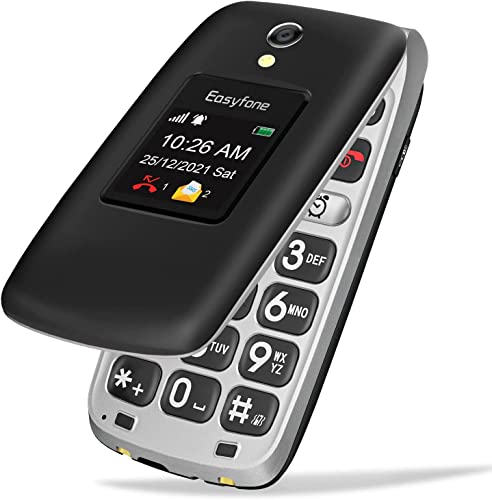 |
Easyfone Prime-A1 Pro Flip Phone | (No Pros Available) | PRICES |
 |
AGM M9 Rugged 4G Feature Phone | Rugged Build | PRICES |
LIVELY Jitterbug Smart4 Senior Smartphone
|
✓ Extremely simple, intuitive interface for seniors ✓ Large, bright screen with big icons and text ✓ Dedicated urgent response button for safety ✓ Affordable, all-inclusive monthly service plans |
✗ Phone is locked to the Lively service carrier ✗ Limited app selection compared to standard smartphones |
| Specification: | |
| Screen Size | 6.75 inches |
| Storage Capacity | 32 GB |
| Camera | 13 MP Rear, 5 MP Front |
| Battery Life | Up to 14 days standby |
| Connectivity | 4G LTE on Lively Network |
| Special Feature | Urgent Response Button |
My first impression of the Jitterbug Smart4 was how it successfully bridges the gap between a modern smartphone and senior-friendly design. The phone itself is lightweight yet feels sturdy, and the large 6.75-inch screen is immediately noticeable. It doesn't look like a medical device, which is a plus, but the simplified home screen with massive, clear icons signals its purpose right away.
Setup was remarkably straightforward. Since the phone comes pre-activated on the Lively network with no SIM card to fuss with, it was essentially a matter of charging it and turning it on. The guided setup process uses simple language and large buttons, making it easy for a less tech-savvy user to configure basic settings like text size and volume without assistance.
In daily performance, the phone is reliably basic. Calls are clear and loud, and the 4G LTE connection through Lively's network (which uses major carrier infrastructure) has been solid for calls and light data use. The interface is snappy for its core functions—calling, texting, and photos. It handles its intended tasks without the lag or complexity that can frustrate older users.
The standout features are all geared towards safety and simplicity. The dedicated Urgent Response button on the back is a major selling point, connecting the user directly to a trained agent who can assess the situation and contact family or emergency services. The health and safety apps are front and center, and the simplified app menu includes curated essentials like a magnifier, camera, and email, avoiding the overwhelming app drawers of standard phones.
Compared to a standard smartphone with a simplified launcher app installed, the Jitterbug Smart4 offers a more integrated and secure experience. The hardware and software are designed in unison, and the built-in safety services are more robust than a third-party app. However, it is less flexible than a carrier-unlocked phone, as you cannot switch providers or access the full Google Play Store.
The value proposition is strong for its target audience. The phone itself is reasonably priced, and the monthly Lively service plans are all-inclusive, bundling unlimited talk and text with data and the vital safety services. For seniors who prioritize ease of use, reliability, and peace of mind (for themselves and their families) over technological bells and whistles, this phone and plan offer excellent value.
LIVELY Jitterbug Flip2 Senior Phone
|
✓ Large, bright buttons and screen ✓ Powerful speaker and clear sound ✓ Simple, intuitive menu system ✓ Includes urgent response button |
✗ Must use Lively service plan ✗ Camera quality is very basic |
| Specification: | |
| Carrier | Lively (GreatCall) Network Only |
| Screen Size | 2.8-inch color display |
| Battery Life | Up to 10 days standby |
| Camera | 2MP rear camera |
| Special Feature | 5Star Urgent Response Button |
The Jitterbug Flip2 arrives with a classic, sturdy feel that inspires confidence. The bright red color is easy to spot, and the flip phone design is immediately familiar and reassuring. Opening the phone reveals a keypad with large, well-spaced buttons and a clear, color screen that is simple to read without being overwhelming. The build quality feels solid, not cheap or flimsy, which is important for a device meant for daily use.
Setup is handled entirely through Lively (formerly GreatCall). You must activate their specific service plan; you cannot use a SIM card from another carrier. This process is done over the phone with their customer service, which is tailored for seniors and is generally patient and helpful. They guide you through powering on the phone and explain the plan options. The phone comes pre-configured, so there's no complicated software installation or account linking for the user to manage.
Performance is exactly what it promises: reliable and straightforward. Call quality is excellent, with a loud earpiece speaker and a dedicated volume booster button. The microphone is sensitive, so there's no need to shout. For basic calling and texting, it performs flawlessly. The menus are logical, with large text icons, and scrolling is slow and deliberate to prevent accidental selections. The battery life is outstanding, easily lasting multiple days on a single charge with moderate use.
Key features are all designed for accessibility and safety. The oversized buttons are backlit, and the screen font is adjustable. The 5Star button on the back is the standout feature—a press connects you directly to a trained agent who can provide emergency assistance, medical advice, or contact family. The phone also includes a camera, flashlight, and a basic web browser, though these are secondary to its core communication and safety functions.
Compared to a standard modern smartphone, the Flip2 lacks apps, a high-res camera, and fast internet. However, that's not its purpose. Compared to other senior-focused phones, it stands out for its seamless integration with the reliable Lively nationwide network and its urgent response service, which is more robust than simple speed-dial setups found on some unlocked basic phones. The requirement to use their plan is a trade-off for this integrated safety net.
The value is clear for its target user. While the phone itself has a cost and the monthly service plans are required, you are paying for unparalleled ease of use and peace of mind. The combination of a no-fuss physical device with immediate access to urgent care professionals is a powerful package for seniors living independently and their concerned families. For basic, reliable communication with a critical safety net, the Jitterbug Flip2 delivers excellent value.
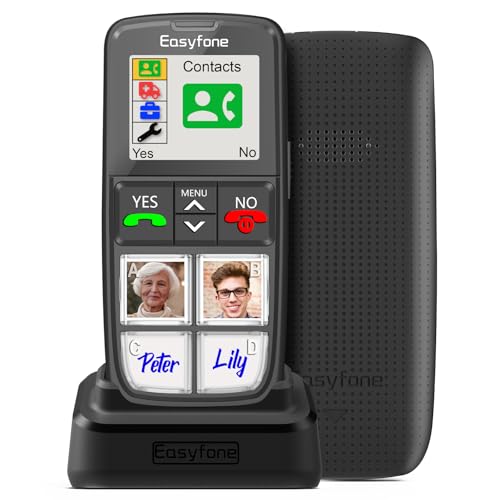
Easyfone T6 Senior Cell Phone
|
✓ Extremely simple picture button interface ✓ Loud, clear sound quality for calls ✓ Reliable SOS emergency button ✓ Convenient magnetic charging dock |
✗ Very basic functionality, no apps ✗ Screen is small and low resolution |
| Specification: | |
| Network Compatibility | 4G LTE |
| Special Features | SOS Button, Picture Dialing |
| Charging Method | Magnetic Dock |
| Included | SIM Card, Charger |
| Color | Black |
The Easyfone T6 arrives in straightforward packaging, and the first impression is of a solid, lightweight device built for a specific purpose. Its black finish is simple, and the physical buttons are large and tactile. It feels durable, not like a fragile smartphone, which is exactly what you want for its intended users.
Setup is remarkably easy. The included SIM card is a major plus, eliminating a common hurdle. Programming the picture buttons for key contacts is intuitive—you just assign a photo to a number. The magnetic charging dock snaps into place effortlessly, making charging foolproof for those who struggle with small ports.
Performance is where this phone shines. Call quality is excellent, with volume that gets loud enough for hearing-impaired users. The 4G connectivity provides reliable service for calls. The SOS button works as advertised, sending alerts to pre-set contacts, which provides invaluable peace of mind for families.
Key features are perfectly tailored. The picture-based dialing is the star, replacing confusing contact lists with familiar faces. The oversized buttons and simple menu are a relief. The magnetic dock is a genius addition, preventing fumbling with cables. It lacks any distracting smart features, which is its core design philosophy.
Compared to other senior phones, the T6 stands out for its included SIM and superb charging solution. It’s more focused on core communication than models with cameras or games. For someone needing a pure, reliable telephone, it outperforms attempts to repurpose an old smartphone with complicated interfaces.
The value is outstanding for its target audience. For seniors, individuals with dementia, or even young kids, it delivers exactly what it promises: accessible, reliable communication and safety. The included SIM and dock add to the out-of-the-box readiness. It’s a worthwhile investment for family peace of mind.
Easyfone Prime-A1 Pro Flip Phone
|
✓ Extremely large, tactile buttons ✓ Excellent emergency SOS feature ✓ Clear, loud sound quality ✓ Simple, intuitive menu system |
✗ Basic camera is low resolution ✗ No smartphone app support |
| Specification: | |
| Network Compatibility | Unlocked 4G LTE |
| Display | 2.8-inch internal screen |
| Battery | 1500mAh with charging dock |
| Special Features | SOS Button, Photo Speed Dial |
| Included | SIM Card, Charging Dock |
The Easyfone Prime-A1 Pro arrives with a solid, reassuring build. Opening the flip phone reveals a classic keypad layout that immediately feels familiar and accessible. The black finish is understated, and the overall size is comfortable to hold, striking a good balance between being substantial enough not to be lost but not overly bulky.
Setup is remarkably straightforward. The included SIM card is a major convenience, and the charging dock eliminates fumbling with small ports. Pairing the phone with a senior-friendly cellular plan took mere minutes. The menu guides you through language and time settings with clear, large text, making the initial configuration stress-free.
In daily performance, this phone excels at its core functions. Call quality is outstanding, with voices coming through loud and clear without distortion, even in moderately noisy environments. The battery life is impressive, easily lasting multiple days on a single charge thanks to the efficient software and the convenience of just dropping it onto the dock.
The tailored features are where this phone truly shines for its target audience. The dedicated SOS button on the back is a standout, allowing quick emergency calls to pre-set contacts. The photo speed dial lets you assign contacts to pictures for one-touch calling, and the block button effectively silences unknown numbers, reducing spam and anxiety.
Compared to other senior-focused phones, the Prime-A1 Pro stands out for its modern 4G compatibility, ensuring it will work on current networks, unlike older 3G models. It is more feature-rich than the most basic Jitterbug models but avoids the complexity and higher cost of a simplified smartphone like the Doro 7080.
For the value, this is an excellent purchase. It bundles the essential phone, a SIM card, and a clever charging dock into one package. When paired with an affordable, no-contract senior plan, it provides reliable communication and safety features without any of the overwhelming bloat or high monthly costs of a standard smartphone. It delivers exactly what it promises.
AGM M9 Rugged 4G Feature Phone
|
✓ Extremely durable and waterproof design ✓ Large, tactile buttons and clear display fonts ✓ Simple, intuitive menu system for ease of use ✓ Excellent battery life from the 1200mAh cell |
✗ Exclusively locked to T-Mobile's network ✗ Lacks modern smartphone apps and connectivity |
| Specification: | |
| Network Compatibility | T-Mobile 4G LTE Only |
| Battery Capacity | 1200mAh |
| Durability | IP68 Water & Dust Resistant |
| Special Features | FM Radio, Flashlight, Speed Dial |
| Card Slots | Triple Slot (2x SIM, 1x microSD) |
My initial impression of the AGM M9 was that it is built like a tiny tank. It has a substantial, rubberized feel that immediately communicates durability. The bright orange accents and oversized buttons make it clear this phone is designed for functionality and visibility, not style. It feels like it could survive a real beating, which is exactly what many users need.
Setup was straightforward. Inserting the T-Mobile SIM card and the battery was simple with the easy-to-remove back cover. Upon powering on, the phone guides you through setting the time and date. The most crucial step was programming the speed-dial keys, which is a menu-driven process that, while not instantaneous, is well worth the few minutes it takes for the primary user benefit.
Performance is rock-solid for its intended purpose. Call quality is excellent—voices come through loud and clear on both ends, aided by a good speaker. The 4G connectivity provides reliable call and text service, though data is basic. The interface is snappy because it's running a simple OS with no bloatware. It does one thing and does it very well: making and receiving calls.
The feature set is thoughtfully curated for a basic phone. The FM radio is a fantastic inclusion that doesn't require data. The flashlight is surprisingly bright. The triple card slots offer flexibility for travelers or those managing two numbers. The large fonts and high-contrast display are genuinely easy to read, and the menu system avoids nested sub-menus wherever possible.
Compared to other senior or rugged phones, the AGM M9 stands out for its pure, no-nonsense approach. It lacks the clunky touchscreen hybrids that often complicate things. It’s more focused than a Jitterbug, offering better durability, and more modern than basic 3G phones being phased out. Its direct competitor would be the Nokia 6300 4G, but the AGM wins on outright toughness and battery life.
The value proposition is strong for its niche. For a senior, a outdoorsperson, or anyone who needs a reliable communication tool without distractions, this phone is an investment in simplicity and peace of mind. Considering its rugged specs and the cost of a typical smartphone plan, this device paired with a low-cost T-Mobile plan offers tremendous value for basic communication needs.
What Is The Best Cell Phone Plan For Seniors?
Choosing the best cell phone plan for a senior involves more than just price; it requires finding a service that pairs seamlessly with a senior-friendly phone and offers the right balance of simplicity, reliability, and essential features. The goal is to reduce stress and technical hurdles while ensuring safety and connectivity.
Many plans designed for seniors are bundled with specific, easy-to-use handsets, like those from LIVELY or Easyfone, which are pre-configured for immediate use. These plans often prioritize straightforward pricing with no contracts, reliable nationwide coverage, and accessible customer support tailored to less tech-savvy users.
- Device Bundling
- Simplified Pricing
- Reliable Coverage
- Dedicated Support
1. Device Bundling: Many senior plans include a compatible phone, ensuring hassle-free setup and operation without needing to find a separate SIM card.
2. Simplified Pricing: Look for plans with flat, predictable monthly rates and no hidden fees or complex data allowances to avoid bill shock.
3. Reliable Coverage: Consistent network coverage in the user's common areas (home, doctor's office) is critical for safety and daily communication.
4. Dedicated Support: Access to customer service trained to assist seniors with patience and clear instructions is a major benefit.
What Factors Should I Consider When Buying?
When purchasing a cell phone and plan for a senior, the primary focus should be on ease of use, safety, and overall value. The device and service must work together to support the user's lifestyle and potential physical or cognitive needs.
Evaluation should extend beyond the handset to the service structure, cost over time, and the availability of helpful features. The ideal package minimizes complexity while maximizing independence and peace of mind for both the senior and their family.
- Phone Type
- Safety Features
- Plan Cost Structure
- Activation and Setup
1. Phone Type: Decide between a simple smartphone with large icons or a basic flip phone with big buttons based on the user's comfort with technology.
2. Safety Features: Prioritize phones with dedicated SOS buttons, fall detection, or urgent response services linked to the plan.
3. Plan Cost Structure: Assess total monthly costs, including any mandatory health and safety service fees, to understand the long-term financial commitment.
4. Activation and Setup: Consider if the phone requires activation on a specific carrier (like LIVELY) or is unlocked and ready for any SIM card for greater flexibility.
What Key Specs Matter Most?
For senior cell phones, the most important specifications are those that directly impact usability, safety, and reliability. High-end processor speed or camera megapixels are less critical than specs that enhance clarity, battery life, and durability.
These key specs ensure the phone can perform its primary functions effectively: making clear calls, sending messages, and providing emergency assistance without frequent charging or technical failure.
- Sound Quality and Volume
- Battery Life and Charging
- Screen and Button Size
- Durability and Design
1. Sound Quality and Volume: Powerful speakers and clear microphones are essential for users with hearing difficulties to communicate effectively.
2. Battery Life and Charging: Long battery life (measured in days, not hours) and easy charging methods like docking stations prevent anxiety about a dead phone.
3. Screen and Button Size: Large, high-contrast screens with big fonts and physical, well-spaced buttons aid users with vision or dexterity challenges.
4. Durability and Design: Rugged, waterproof builds (like AGM M9) or ergonomic designs help withstand drops and are easier to grip for arthritic hands.
Which Brands Are Most Recommended?
Several brands have established strong reputations in the senior cell phone market by focusing on user-friendly design, reliable service, and dedicated support. These companies understand the unique needs of older adults and often provide integrated solutions.
These standout brands typically offer a curated experience, combining purpose-built hardware with tailored service plans and features like 24/7 urgent response, making them a trusted choice for families.
- LIVELY (Jitterbug)
- Easyfone
- AGM
- Consumer Cellular
1. LIVELY (Jitterbug): Highly recommended for its full-service approach, bundling easy-to-use phones with reliable nationwide service and optional 24/7 urgent response assistance.
2. Easyfone: Known for providing unlocked, versatile senior phones that work with various carriers, often including helpful features like photo speed dial and charging docks.
3. AGM: A top choice for seniors with active lifestyles, offering rugged, durable basic phones that are waterproof, drop-proof, and have long battery life.
4. Consumer Cellular: Often praised for its excellent senior-focused customer service, flexible no-contract plans, and compatibility with a range of accessible phones.
How Should I Use My Senior Cell Phone?
Proper setup and daily use of a senior cell phone are crucial for ensuring it becomes a helpful tool, not a source of frustration. Taking time initially to configure the phone correctly will pay off in long-term ease of use and reliability.
Establishing simple routines for charging, making calls, and using safety features will help the user build confidence. Family members can assist by personalizing settings and practicing common tasks together.
- Initial Personalization
- Safety Feature Practice
- Charging Routine
- Call Management
1. Initial Personalization: Set up speed dial buttons with photos of family, maximize text font size, and adjust ringer volume before giving the phone to the user.
2. Safety Feature Practice: Regularly practice using the SOS button and any emergency call procedures so the user feels comfortable and remembers in a crisis.
3. Charging Routine: Place the charging dock in a consistent, obvious location (like a bedside table) to establish a daily habit of powering the phone.
4. Call Management: Teach how to answer calls (often just opening the flip phone) and use block functions to prevent nuisance calls from telemarketers.
When Should I Replace My Senior Cell Phone?
The lifespan of a senior cell phone depends on both its physical condition and its ability to meet the user's evolving needs. While these devices are built for durability, technological changes and personal requirements will eventually necessitate an upgrade.
Replacement is often prompted by a combination of declining performance, compatibility issues with modern networks, or the user's need for more advanced safety features. Proactively upgrading can prevent emergencies and improve connectivity.
- Network Incompatibility
- Frequent Technical Problems
- Changing Health Needs
- Physical Damage
1. Network Incompatibility: If the phone is 3G or older and the carrier is shutting down that network, it will stop working entirely and must be replaced with a 4G/5G device.
2. Frequent Technical Problems: Persistent issues like calls dropping, battery draining too fast, or the phone freezing indicate it is nearing the end of its functional life.
3. Changing Health Needs: If a user's vision, hearing, or cognition declines, they may need a different phone model with larger buttons, a simpler interface, or enhanced safety services.
4. Physical Damage: Significant cracks, unresponsive buttons, or a broken hinge (on flip phones) that impair daily use and safety functions warrant a replacement.

Ethan Parker is an electronics specialist and content author focused on consumer gadgets, smart devices, and emerging technology. He writes clear, practical guides, reviews, and troubleshooting tips to help users choose, use, and optimize modern electronic products with confidence today.