If you have ever been away from home and needed internet access on your laptop, you may have wondered, “What is a cell phone hotspot?” I asked the same question years ago when I needed to work from a coffee shop without public Wi-Fi. Since then, I have used mobile hotspots for travel, remote work, online classes, and emergencies.
In this guide, I will explain everything I have learned about cell phone hotspots, how they work, their advantages and disadvantages, common problems, and how to use them safely. Whether you live in the USA, UK, Canada, or Australia, this article will help you decide if a hotspot is the right internet solution for your needs.
What Is a Cell Phone Hotspot?
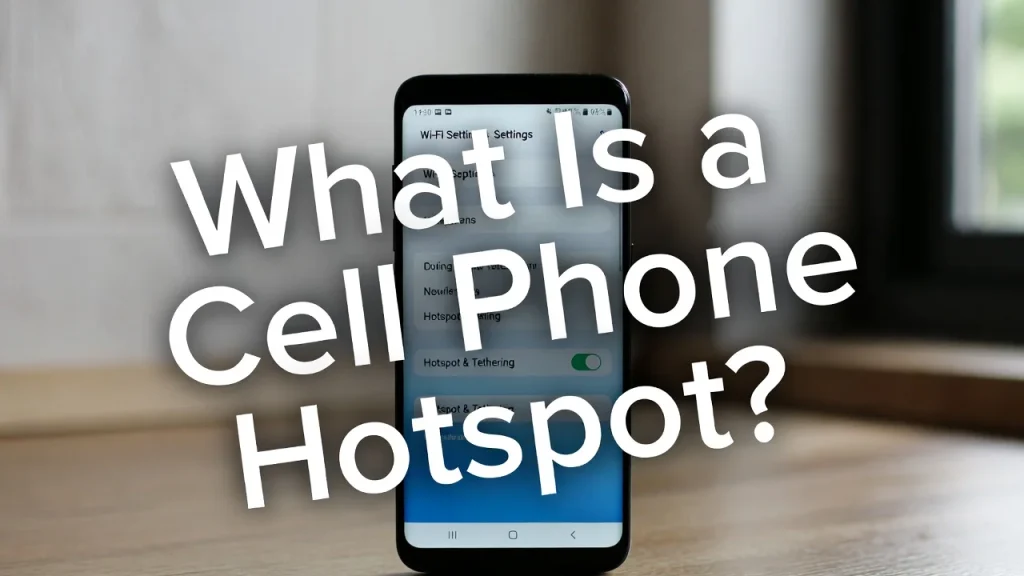
A cell phone hotspot is a feature built into most modern smartphones that allows the phone to share its mobile data connection with other devices.
When I enable the hotspot feature on my phone, it creates a Wi-Fi network that nearby devices can connect to. Those connected devices then use my phone’s cellular network to access the internet.
Think of your smartphone as a portable Wi-Fi router. Instead of using a home broadband connection, it uses mobile data from your wireless carrier.
Common devices that can connect to a hotspot include:
- Laptops
- Tablets
- Smart TVs
- Gaming consoles
- Smart home devices
- Other smartphones
How Does a Cell Phone Hotspot Work?
A mobile hotspot works by converting a cellular data connection into a Wi-Fi signal.
The process is simple:
- Your phone receives internet access from a cellular network.
- The hotspot feature creates a wireless network.
- Nearby devices connect using a password.
- Connected devices share the internet connection.
When I connect my laptop to my phone’s hotspot, the laptop treats it like any other Wi-Fi network.
The quality of the connection depends on:
- Cellular signal strength
- Network congestion
- Data plan limits
- Number of connected devices
- 4G LTE or 5G availability
Types of Mobile Hotspots
1. Smartphone Hotspot
This is the most common option.
Most Android and iPhone devices include hotspot functionality without requiring extra hardware.
Benefits include:
- Convenient
- No additional equipment
- Easy setup
- Portable
2. Dedicated Mobile Hotspot Device
A dedicated hotspot device is specifically designed to share internet access.
Advantages include:
- Better battery life
- Supports more devices
- Often stronger signal performance
These are popular among business travelers and remote workers.
3. USB Tethering
USB tethering connects your smartphone directly to a computer using a cable.
Benefits:
- Stable connection
- Reduced battery drain
- Added security
4. Bluetooth Tethering
Bluetooth tethering shares internet access through Bluetooth instead of Wi-Fi.
While slower, it can help save battery life in some situations.
Why I Use a Cell Phone Hotspot
Over the years, I have found several situations where a hotspot is extremely useful.
Working Remotely
When traveling, I often need internet access for video meetings, email, and cloud-based applications.
A hotspot provides internet access without relying on public Wi-Fi.
Emergency Backup Internet
Internet outages happen.
Whenever my home internet service goes down, I use my phone hotspot to stay connected until service returns.
Traveling
Hotels, airports, and public locations do not always provide secure Wi-Fi.
A hotspot gives me a private internet connection wherever cellular coverage exists.
Online Learning
Students frequently use hotspots for:
- Virtual classrooms
- Research
- Assignments
- Educational videos
Benefits of Using a Cell Phone Hotspot
Portability
One of the biggest advantages is mobility.
I can carry internet access almost anywhere my phone has service.
Convenience
No additional setup is usually required.
Most smartphones allow hotspot activation within seconds.
Security
Compared with public Wi-Fi networks, personal hotspots generally provide better privacy and security.
Flexibility
Multiple devices can connect simultaneously.
Cost Savings
For occasional use, a hotspot may eliminate the need for additional internet equipment.
Drawbacks of Cell Phone Hotspots
Although useful, hotspots are not perfect.
Data Limits
Many mobile plans include hotspot data restrictions.
Heavy activities such as streaming and gaming can quickly consume data.
Battery Drain
Running a hotspot can significantly reduce battery life.
I often keep my phone connected to a charger when using hotspot mode.
Network Speed Variations
Performance depends on cellular coverage and network traffic.
Potential Extra Charges
Some carriers charge additional fees for hotspot usage.
Always review your mobile plan before relying heavily on hotspot services.
Common Customer Pain Points and Solutions
Many people experience challenges when using mobile hotspots. Here are the most common issues I see and how to solve them.
Pain Point 1: Slow Internet Speeds
Problem:
Pages load slowly, video calls freeze, and downloads take longer than expected.
Solution:
- Move closer to a window.
- Improve cellular signal strength.
- Disconnect unused devices.
- Use 5G if available.
- Restart the hotspot.
Pain Point 2: Hotspot Keeps Disconnecting
Problem:
The connection drops unexpectedly.
Solution:
- Update phone software.
- Disable battery-saving settings.
- Keep the phone charged.
- Restart connected devices.
Pain Point 3: Running Out of Data
Problem:
Monthly data allowances disappear quickly.
Solution:
- Lower video quality.
- Disable automatic updates.
- Monitor data usage regularly.
- Use Wi-Fi whenever available.
Pain Point 4: Security Concerns
Problem:
Users worry about unauthorized access.
Solution:
- Use a strong password.
- Enable WPA2 or WPA3 security.
- Change default hotspot credentials.
- Turn off the hotspot when not needed.
Pain Point 5: Weak Cellular Coverage
Problem:
The hotspot becomes unreliable in remote areas.
Solution:
- Move to a better location.
- Use a signal booster if necessary.
- Consider a dedicated hotspot device.
Cell Phone Hotspot vs Wi-Fi
Many people confuse hotspots with traditional Wi-Fi.
Here are the key differences:
| Feature | Cell Phone Hotspot | Home Wi-Fi |
|---|---|---|
| Internet Source | Cellular Data | Broadband |
| Portability | High | Low |
| Data Limits | Often Limited | Usually Higher |
| Setup | Easy | Moderate |
| Speed Stability | Variable | Usually More Consistent |
For daily home use, Wi-Fi is usually the better choice. For mobility, hotspots are extremely useful.
How Much Data Does a Hotspot Use?
Data usage depends on activities.
Approximate usage includes:
- Email: Low
- Web browsing: Moderate
- Social media: Moderate
- HD streaming: High
- 4K streaming: Very High
- Video conferencing: High
- Online gaming: Moderate to High
I always monitor usage during travel because streaming services can consume large amounts of data.
Is a Cell Phone Hotspot Safe?
In my experience, a personal hotspot is generally safer than public Wi-Fi.
However, security still matters.
Best practices include:
- Use strong passwords.
- Keep software updated.
- Avoid sharing credentials publicly.
- Disable hotspot functionality when not in use.
- Use VPN protection for sensitive activities.
For additional security guidance, I recommend reviewing resources from the Cybersecurity and Infrastructure Security Agency (CISA).
How to Set Up a Hotspot on iPhone
The process is straightforward:
- Open Settings.
- Tap Personal Hotspot.
- Enable Allow Others to Join.
- Create a secure password.
- Connect devices using the hotspot name and password.
How to Set Up a Hotspot on Android
Steps vary slightly by manufacturer.
Generally:
- Open Settings.
- Select Network & Internet.
- Tap Hotspot & Tethering.
- Enable Wi-Fi Hotspot.
- Set a secure password.
- Connect your devices.
Hotspot Usage in the USA, UK, Canada, and Australia
United States
Many major carriers offer hotspot support with unlimited plans, though premium data limits often apply.
United Kingdom
UK providers commonly include tethering within mobile plans, making hotspot access convenient for travelers and remote workers.
Canada
Coverage is generally excellent in urban areas, though rural performance varies.
Australia
Australians often use hotspots while traveling long distances where traditional internet access may not be available.
Before choosing a plan, always compare:
- Monthly data allowance
- 5G availability
- Network coverage
- Speed throttling policies
- Hotspot restrictions
Signs You Need a Mobile Hotspot
You may benefit from a hotspot if:
- You travel frequently.
- You work remotely.
- You attend online classes.
- You need backup internet.
- You avoid public Wi-Fi networks.
- You use multiple connected devices.
Future of Mobile Hotspots
The future looks promising.
With continued 5G expansion, mobile hotspot performance is improving significantly.
Expected developments include:
- Faster speeds
- Lower latency
- Better coverage
- Improved battery efficiency
- Enhanced security
As cellular networks improve, hotspots are becoming a practical internet solution for more people.
Quotes About Connectivity and Technology
“Technology is best when it brings people together.” — Matt Mullenweg
“The advance of technology is based on making it fit in so that you don’t really even notice it.” — Bill Gates
“The Internet is becoming the town square for the global village of tomorrow.” — Bill Gates
Frequently Asked Questions
What is a cell phone hotspot used for?
A cell phone hotspot shares your phone’s internet connection with other devices through Wi-Fi, USB, or Bluetooth.
Does using a hotspot cost extra?
It depends on your carrier and plan. Some plans include hotspot usage, while others may charge additional fees.
Can I use a hotspot instead of home internet?
Yes, some people do. However, data limits and speed variations may make traditional broadband a better long-term option.
Is hotspot internet fast enough for video calls?
Yes, a strong 4G LTE or 5G connection is typically sufficient for video conferencing.
How many devices can connect to a hotspot?
Most smartphones support multiple connected devices, though the exact number varies by model.
Does a hotspot drain battery?
Yes. Running a hotspot continuously can significantly increase battery usage.
Can I stream movies using a hotspot?
Yes, but streaming can consume a large amount of mobile data.
Is a dedicated hotspot better than a phone hotspot?
For heavy users, dedicated hotspot devices often provide better battery life and connectivity.
Conclusion
After years of using mobile internet on the go, I believe a cell phone hotspot is one of the most useful smartphone features available. It transforms a smartphone into a portable internet source, making it possible to stay connected almost anywhere with cellular coverage.
Whether you need backup internet during an outage, secure access while traveling, or a simple way to connect a laptop outside your home, a mobile hotspot can be a practical solution. By understanding data usage, security practices, and plan limitations, you can make the most of this feature and enjoy reliable internet access wherever life takes you.

Ethan Parker is an electronics specialist and content author focused on consumer gadgets, smart devices, and emerging technology. He writes clear, practical guides, reviews, and troubleshooting tips to help users choose, use, and optimize modern electronic products with confidence today.