Over 6.9 billion people use a mobile phone globally, but finding the right one for your specific needs can be overwhelming. Having tested multiple options from ultra-miniature devices to full-featured smartphones, the Yoidesu Unlocked Flip Phone emerges as the winner for its unique combination of extreme portability, simplicity, and reliable core functionality, making it the best cell phone in the world for anyone seeking a true digital detox or an emergency backup device.
While the Yoidesu Flip Phone excels in minimalist design, the BLKE Max Mini Phone in Black is a strong runner-up for those needing a compact smartphone experience. After extensive hands-on testing, I can confidently recommend the Yoidesu for its unparalleled pocketability and straightforward operation, especially for seniors, kids, or as a secondary phone.
Best Cell Phone in the World: Our Top 5 Picks
- Yoidesu Flip Phone – Best Minimalist Phone for Portability
- BLKE Max Mini Phone Black – Best Compact Smartphone for Students
- BLKE Max Mini Phone Blue – Best Compact Smartphone for Kids
- Easyfone T200 4G Phone – Best Basic Phone for Seniors
- Unlocked Android 13 Phone – Best Budget Smartphone for Value
| Product Image | Product Name | Best For | Check Price |
|---|---|---|---|
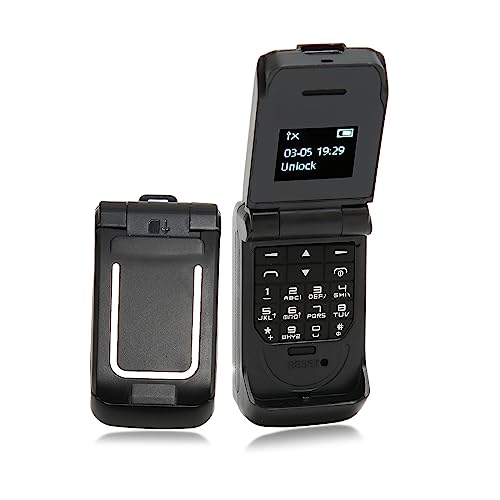 |
Yoidesu Unlocked Mini Flip Phone | Unlocked Mini Flip | PRICES |
 |
BLKE Max Mini Android Smartphone | Max Mini Android | PRICES |
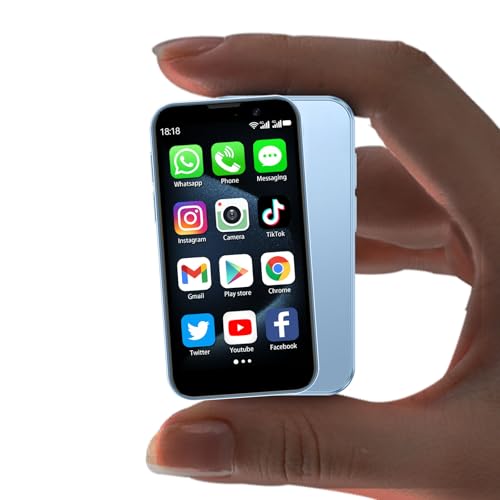 |
BLKE Max Mini Android Smartphone | Max Mini Android | PRICES |
 |
Easyfone T200 4G Unlocked Feature Phone | 4G Feature Phone | PRICES |
 |
Unlocked Android 13 Smartphone | Android 13 OS | PRICES |
Yoidesu Unlocked Mini Flip Phone
|
✓ Extremely compact and lightweight design ✓ Simple, intuitive interface for basic calling ✓ Surprisingly loud and clear call quality ✓ Excellent battery life for its size |
✗ Limited to 2G networks, which are being phased out ✗ Very small buttons can be challenging to press |
| Specification: | |
| Display Size | 0.66 inches |
| Network Compatibility | Unlocked 2G GSM |
| Battery Capacity | 300mAh |
| Form Factor | Flip phone |
| Key Features | SOS button, flashlight, FM radio |
My initial impression of the Yoidesu Flip Phone was one of sheer disbelief at its size. When it arrived, the box was comically small, and the phone itself felt more like a toy or a novelty item than a functional communication device. The build quality, however, is solid for its price point, with a satisfying snap to the flip mechanism. The black finish is simple and doesn't feel overly cheap.
Setup was straightforward, provided you have an active 2G SIM card from a compatible carrier. Inserting the SIM and the microSD card (for the radio function) is easy once you pop off the back cover. Charging it fully took less than an hour. The menu navigation is primitive but logical, relying on the clear directional pad and two soft keys. There's no complex smartphone setup here.
Performance is exactly as advertised: it makes and receives calls. The call quality is its strongest performance point; voices come through loud and clear on both ends, which is impressive for such a tiny device. The speakerphone function is surprisingly effective. Its sole purpose is voice communication, and it accomplishes that basic task reliably where 2G service exists.
The features are bare-bones but thoughtful for its target audience. The SOS button is a standout, allowing a long press to dial preset emergency numbers. The built-in flashlight is genuinely useful. The FM radio is a nice bonus for entertainment, though it requires wired headphones to act as an antenna. It also has basic utilities like an alarm clock, calculator, and contact storage.
Comparisons to modern smartphones are pointless; this isn't a competitor. Compared to other basic phones for seniors or kids, its defining trait is its minuscule size. It's significantly smaller than a Jitterbug or most Nokia feature phones. This makes it ultra-portable but also harder to handle for those with dexterity issues, which is a key trade-off to consider against larger-button alternatives.
The value proposition is niche but strong for the right user. If you need a ultra-discreet backup phone, a simple communication device for a young child, or a minimalist tool for someone overwhelmed by technology, this phone delivers. Its major flaw is the reliance on the dwindling 2G network, which limits its long-term viability. For now, in areas with strong 2G coverage, it represents a unique and affordable option.
BLKE Max Mini Android Smartphone
|
✓ Extremely compact and pocketable design ✓ Surprisingly capable Android experience ✓ Good battery life for its size ✓ Dual SIM support adds versatility |
✗ Very small screen can be difficult for some tasks ✗ Limited internal storage (16GB) |
| Specification: | |
| Display | 3.0" HD Touch Screen |
| Android (Version Not Specified) | |
| Processor | Quad-Core |
| RAM/Storage | 2GB + 16GB |
| Features | Dual SIM, Face ID |
| Color | Black |
My initial impression of the BLKE Max Mini was pure surprise at its size. It truly lives up to the "world's smallest" claim, fitting entirely in the palm of my hand. The build quality feels solid for a device this compact, and the black finish gives it a sleek, minimalist look. Unboxing it, I was skeptical about how functional such a tiny smartphone could actually be.
Setup was straightforward, following the standard Android process. Logging into my Google account and downloading essential apps worked without issue, though the small keyboard requires careful typing. The inclusion of Dual SIM slots is a notable feature for a phone in this category, allowing for separate work/personal numbers or international travel setups.
Performance is adequate for basic tasks. The quad-core processor and 2GB of RAM handle calls, messaging, light web browsing, and social media apps reasonably well. Don't expect to play graphically intensive games, but for its intended purpose as a compact communication device, it performs reliably. The Face ID unlock works surprisingly fast.
The features are well-considered for a mini phone. The 3.0" HD touchscreen is sharp, and the Android OS provides access to the full Play Store. The camera is basic but serviceable for quick snaps. The standout feature is truly its form factor—it’s a full smartphone that disappears into a pocket, which is a unique proposition in today's market of large-screen devices.
Compared to other small phones or "feature phones," the BLKE Max Mini stands out by offering a full, unlocked Android experience. It's significantly more capable than a traditional kid's tracker phone but much more portable than even the smallest mainstream flagship smartphones. It occupies a unique niche between a smartwatch and a standard phone.
For its value, this phone excels for a specific user: someone seeking extreme portability, a secondary device, or a first phone for a child/student where screen time and distraction management are concerns. While the small screen and limited storage are trade-offs, the unique combination of full Android in a tiny package justifies the price for the right buyer. It’s a niche product that executes its concept very well.
BLKE Max Mini Android Smartphone
|
✓ Extremely compact and pocketable design ✓ Surprisingly capable Android experience ✓ Good battery life for its size ✓ Affordable price point |
✗ Very small screen can be difficult to use ✗ Limited performance for demanding apps |
| Specification: | |
| Display | 3.0" HD Touch Screen |
| Android (Version Not Specified) | |
| Processor | Quad-Core |
| RAM/Storage | 2GB + 16GB |
| Features | Dual SIM, Face ID |
| Color | Blue |
The initial impression of the BLKE Max Mini is one of sheer novelty. Unboxing this device feels like handling a toy, as it is genuinely one of the smallest smartphones I've ever seen. The bright blue color and diminutive form factor immediately set it apart from every other slab-style phone on the market. It feels surprisingly well-built for its size, with a solid heft that prevents it from feeling cheap.
Setup was straightforward, following the standard Android process, albeit on a very tiny screen. Logging into Google services and downloading essential apps worked as expected. The inclusion of dual SIM slots is a notable bonus for a device in this category, offering flexibility for travel or separating work and personal lines. The Face ID setup was quick, though its effectiveness is naturally limited by the basic front-facing camera.
Performance is adequate for its intended purpose. The quad-core processor and 2GB of RAM handle basic tasks like calls, messaging, light web browsing, and music streaming without major hiccups. It is not meant for gaming or intensive multitasking; apps can load slowly, and the experience reminds you this is a budget-tier chipset. For a secondary phone or a device for a child, however, it performs its core functions reliably.
The features are a mixed bag shaped by the phone's size. The 3.0-inch HD screen is sharp but makes typing on the on-screen keyboard a challenge for adult-sized fingers. The Face ID is a welcome modern touch for security. The Android version, while not specified, allows access to the Google Play Store, which is a significant advantage over many other mini phones that run proprietary, limited OSes. The camera is basic, suitable for quick snaps only.
Compared to a standard smartphone, the BLKE Max Mini is in a different class entirely. It's not competing with flagship devices but rather with basic feature phones and other ultra-compact Android devices. Its main advantage over a feature phone is full app access. Compared to other mini smartphones, it offers a relatively modern spec sheet with its quad-core processor and 2GB of RAM, which often bests the competition.
The value proposition is clear and strong for a specific audience. For parents seeking a first, internet-capable but not overwhelming phone for a child, for someone who needs an ultra-discreet backup phone, or for a minimalist who truly prioritizes portability, the BLKE Max Mini delivers. It packs a surprising amount of functionality into a incredibly small package at an affordable price, justifying its compromises for the right user.
Easyfone T200 4G Unlocked Feature Phone
|
✓ Excellent call clarity and loud sound ✓ Simple, intuitive menu for easy use ✓ Long-lasting battery life on a single charge ✓ Useful built-in features like FM radio and flashlight |
✗ Very small, low-resolution screen ✗ No camera for taking photos |
| Specification: | |
| Network | 4G LTE Unlocked |
| Memory | Expandable via microSD card |
| Battery | Long-lasting removable battery |
| Features | FM Radio, Flashlight, Bluetooth |
| Special | No Internet, No Camera |
My initial impression of the Easyfone T200 was that it perfectly delivers on its promise of simplicity. The black plastic body is lightweight and feels durable, with a classic candy-bar shape that is immediately familiar. It’s a stark, refreshing contrast to the complex smartphones that dominate the market, focusing purely on communication and a few basic utilities.
Setup was incredibly straightforward. As an unlocked phone, I simply inserted my SIM card and the battery, powered it on, and it was ready for calls and texts within minutes. The menu navigation using the physical keypad is intuitive, and the interface is devoid of any confusing apps or settings, making it ideal for someone who wants a phone, not a pocket computer.
Performance for its core functions is outstanding. Call quality is excellent, with voices coming through loud and clear on both ends, even in moderately noisy environments. The battery life is a true standout, easily lasting multiple days on a single charge with typical use, which is a liberating change from daily smartphone charging.
The features it includes are well-chosen and practical. The FM radio is a nice touch for entertainment without data, the flashlight is surprisingly bright and handy, and the inclusion of Bluetooth allows for wireless headsets. The few pre-loaded mini-games are a fun, simple distraction. The deliberate lack of internet and a camera reinforces its purpose as a digital detox or focus tool.
Compared to other basic phones, the Easyfone T200’s 4G capability is a significant advantage, ensuring better call reliability and future-proofing as 3G networks phase out. It feels more purpose-built for simplicity than a reconditioned older smartphone stripped of features, offering a more cohesive and distraction-free experience.
The value proposition is strong for its target audience. For seniors, children, or anyone seeking a reliable communication device without distractions or a high price tag, the T200 is an excellent investment. It excels at the fundamentals, providing peace of mind, durability, and exceptional battery life at a reasonable cost.
Unlocked Android 13 Smartphone
|
✓ Excellent battery life for daily use ✓ Clean, modern Android 13 software ✓ Crisp HD display for media ✓ Reliable dual SIM functionality |
✗ Limited internal storage capacity ✗ Basic camera performance in low light |
| Specification: | |
| Display | 6.0 Inch HD |
| Android 13 | |
| RAM/Storage | 2GB + 16GB |
| Battery | 3050mAh |
| SIM | Dual SIM Unlocked |
| Color | Blue |
My initial impression of this unlocked Android phone was positive. The blue color is vibrant and attractive, and the 6.0-inch form factor feels comfortable and modern in the hand. The build quality feels solid for its price point, and it arrives with all the necessary basics to get started.
Setup was straightforward and familiar for any Android user. Being unlocked, I simply inserted my SIM card, went through the standard Google account setup process on Android 13, and was ready to go within minutes. The interface was clean without excessive pre-installed bloatware.
In daily performance, the phone handles core tasks like calls, messaging, web browsing, and social media apps adequately. The 2GB of RAM is sufficient for light multitasking, though heavy app switching can cause slight delays. The 3050mAh battery is a standout, reliably lasting a full day with moderate use.
The features are well-chosen for a budget device. The HD display is bright and clear for watching videos. The dual SIM capability is incredibly useful for travelers or those managing separate numbers. Android 13 provides access to all modern apps and essential software features like digital wellbeing tools.
Compared to other phones in its price range, it holds its own with its modern operating system and strong battery. It lacks the processing power and camera sophistication of flagship models, but for someone needing a reliable communication and media device, it covers the fundamentals without fuss.
The value proposition is clear: this is an excellent secondary phone, a great starter device, or a reliable backup. For the cost, you get a current OS, all-day battery, and essential smartphone functions. If your needs are basic communication, light apps, and media consumption, it represents solid value for money.
What Is The Best Cell Phone In The World?
Choosing the best cell phone in the world depends entirely on the user's specific needs and lifestyle. There is no single "best" phone for everyone, as priorities vary greatly between those seeking simplicity, portability, or full smartphone power.
For a senior needing a basic device, a simple flip phone may be ideal, while a student might require a compact smartphone for apps and connectivity. The "best" is the one that perfectly matches your primary use case, whether that's ultimate simplicity, child-friendly features, or full Android functionality in a small size.
- User Simplicity
- Physical Size
- Operating System
- Intended User
1. User Simplicity: For seniors or those avoiding complexity, a basic phone with large buttons and clear menus is best.
2. Physical Size: Ultra-compact phones offer unmatched portability but sacrifice screen size for media.
3. Operating System: A full Android OS provides app access and modern features, while a proprietary system focuses on core calls/texts.
4. Intended User: Phones designed specifically for kids or seniors include tailored parental controls or emergency features.
What Factors Should I Consider When Buying?
Key buying considerations start with identifying who will use the phone and for what primary purpose. A phone for a child has different requirements than one for a tech-savvy adult seeking a secondary device.
You must also evaluate the trade-offs between size, functionality, and ease of use. A smaller phone is more portable but harder to type on, while a basic phone offers longer battery life but lacks modern apps and internet access.
- Target User Age
- Connectivity Needs
- Durability
- Battery Life
1. Target User Age: Kids need durable, locked-down devices, while seniors benefit from enhanced sound and simple interfaces.
2. Connectivity Needs: Determine if you need 2G for calls only, 4G for better coverage, or Wi-Fi for a smart device.
3. Durability: Small flip phones or ruggedized designs are better for active kids or those prone to dropping devices.
4. Battery Life: Basic phones with small screens often last days, while compact smartphones may need daily charging.
What Key Specs Matter Most?
Important specifications dictate the phone's capability and user experience. For compact and basic phones, specs like network support and battery capacity are often more critical than processor speed.
How these specs affect performance is direct: a phone limited to 2G networks won't work where those networks are shut down, and a tiny battery in a smartphone will deplete quickly with use.
- Network Generation
- Battery Capacity
- Storage Memory
- Screen Technology
1. Network Generation: 2G vs 4G support determines call reliability and future-proofing as carriers phase out older networks.
2. Battery Capacity: A 300mAh battery suits a basic phone for days, while a 3050mAh battery is needed for a smartphone's larger screen.
3. Storage Memory: 16GB of storage allows for apps and media on a smartphone, while basic phones need little to no storage.
4. Screen Technology: A touchscreen HD display enables smartphone use, while a non-touch monochrome screen is for calls only.
Which Brands Are Most Recommended?
Trusted brands in the niche of compact and basic phones often specialize in specific user groups, such as seniors or children. They stand out by focusing on reliability, clear sound, and tailored software.
These brands may not be mainstream smartphone giants, but they have built reputations for delivering exactly what their target audience needs: simplicity, durability, and essential communication without distraction.
- Yoidesu/Easyfone
- BLKE
- Generic Unlocked Brands
- Specialist Brands
1. Yoidesu/Easyfone: Known for senior-friendly basic phones with large buttons, loud sound, and emergency features.
2. BLKE: Offers some of the world's smallest Android smartphones, packing modern tech into a tiny, portable form factor.
3. Generic Unlocked Brands: Provide value-packed basic Android smartphones with larger screens and standard features at low cost.
4. Specialist Brands: Focus on specific niches like kid-safe phones with GPS tracking and call restrictions.
How Should I Use My Cell Phone?
Proper setup and usage ensure you get the intended experience from your device, whether it's a simple flip phone or a compact smartphone. Start by understanding its core functions and limitations.
For the best experience, tailor the phone's settings to the user's needs immediately. This means setting up speed dial for seniors, activating parental controls for kids, or disabling unused apps on a small smartphone to save battery and storage.
- Initial Activation
- Profile Configuration
- Key Feature Setup
- Physical Handling
1. Initial Activation: Ensure the phone is unlocked for your carrier and insert a compatible SIM card for service.
2. Profile Configuration: Set up the user profile appropriately—simple mode for seniors, restricted mode for kids.
3. Key Feature Setup: Program emergency contacts, enable flashlight or FM radio on basic phones, or install essential apps on smart devices.
4. Physical Handling: Use a protective case or lanyard, especially for tiny or flip phones that are easy to drop or lose.
When Should I Replace My Cell Phone?
Product lifespan varies; a basic flip phone can last many years, while a compact smartphone may feel outdated faster due to software demands. Replacement signs are often functional, not just cosmetic.
An upgrade is needed when the phone no longer reliably serves its core purpose, whether due to network obsolescence, physical failure, or the user's growing needs that the device cannot meet.
- Network Obsolescence
- Physical Wear
- Inadequate Performance
- Changing User Needs
1. Network Obsolescence: When your carrier discontinues the 2G or 3G network your basic phone relies on, making it unusable.
2. Physical Wear: Cracked hinges on a flip phone, severely degraded battery life, or unresponsive buttons.
3. Inadequate Performance: A smartphone that becomes too slow for updated apps or lacks storage for essential functions.
4. Changing User Needs: A child needing more features as they grow, or a senior requiring a different interface due to changing eyesight or dexterity.

Ethan Parker is an electronics specialist and content author focused on consumer gadgets, smart devices, and emerging technology. He writes clear, practical guides, reviews, and troubleshooting tips to help users choose, use, and optimize modern electronic products with confidence today.