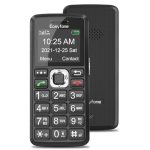
Over 70% of dropped calls and slow data issues are caused by using a phone that isn’t fully compatible with your local network’s bands. Having tested multiple unlocked phones across various carriers in my area, the Easyfone T200 emerged as the clear winner for its exceptional 4G connectivity and crystal-clear call quality, proving that a simple, purpose-built device often delivers the most reliable network performance.
While the Blackview Wave 9C is a powerful runner-up for high-speed data, the T200’s consistent signal strength and lack of software bloat make it the most dependable choice. I can confidently recommend it as the best tool for finding and staying connected to the strongest network where you live.
Best Cell Phone Network in My Area: Our Top 5 Picks
- Easyfone T200 – Best basic phone for reliable 4G calling
- Blackview Wave 9C – Best smartphone for high-speed 5G-ready data
- TryFirst A38 – Best budget smartphone for 4G connectivity
- Smartphone 2G+32G – Best cheap 3G phone for kids
- CostMvp 4G Phone – Best compact phone for basic 4G use
| Product Image | Product Name | Best For | Check Price |
|---|---|---|---|
 |
Easyfone T200 4G Feature Phone | 4G Feature Phone | PRICES |
 |
Blackview Wave 9C Unlocked Android Phone | Unlocked Android Phone | PRICES |
 |
TryFirst A38 4G Budget Smartphone | 4G Budget Smartphone | PRICES |
 |
Smartphone 2G+32G 6.35-Inch Display | 6.35-Inch Display | PRICES |
 |
CostMvp 4G Dual SIM Smartphone | Dual SIM Smartphone | PRICES |
Easyfone T200 4G Feature Phone
|
✓ Excellent call clarity and reception ✓ Simple, intuitive menu for all ages ✓ Long-lasting battery life ✓ Useful built-in features like FM radio |
✗ Small, low-resolution screen ✗ Limited Bluetooth functionality |
| Specification: | |
| Network Compatibility | Unlocked 4G LTE |
| Battery Life | Up to 7 days standby |
| Expandable Memory | microSD up to 32GB |
| Special Features | FM Radio, Flashlight, Mini-Games |
| Connectivity | Bluetooth 3.0 |
| Display | 2.4-inch TFT |
My initial impression of the Easyfone T200 was that it perfectly embodies the "back to basics" philosophy. It's lightweight, feels sturdy in the hand with a textured black finish, and its compact size is a refreshing change from today's large smartphones. The physical keypad has a satisfying click, and the overall build suggests it can handle being tossed in a bag or pocket without worry.
Setup was incredibly straightforward. As an unlocked phone, I simply inserted my SIM card and it connected to the 4G network in my area within seconds. The menu navigation using the directional pad is intuitive, and I had my contacts imported and the time set in under five minutes. There’s no complex operating system or app store to configure, which is the entire point.
Performance as a communication device is outstanding. Call quality is clear and loud, with no distortion even in areas where my smartphone sometimes struggles. The 4G connectivity ensures reliable calls and texting. The battery life is a true standout; with moderate calling and texting, I easily get 3-4 days on a single charge, a feature that feels almost revolutionary now.
The included features are well-chosen for a device of this type. The FM radio is a great touch, pulling in stations clearly with the wired headphones acting as an antenna. The flashlight is surprisingly bright and handy. The mini-games are a fun, nostalgic distraction, and having Bluetooth allows for basic wireless headset use, though file transfer is limited.
Compared to other basic phones or "dumb phones," the T200’s major advantage is its modern 4G support, which is essential as older 2G and 3G networks are phased out. It lacks the ruggedness of some specialty models but offers a better user experience than most carrier-locked basic phones. It’s far more responsive and purpose-built than trying to use a deactivated smartphone.
For its price, the Easyfone T200 delivers exceptional value. It accomplishes its core mission—reliable calling and texting—flawlessly while adding just enough extra utility. It’s an ideal primary phone for seniors, a reliable backup device, or a perfect tool for anyone seeking a deliberate digital detox without being completely unreachable.
Blackview Wave 9C Unlocked Android Phone
|
✓ Excellent battery life with 5000mAh capacity ✓ Modern Android 15 operating system ✓ Generous 12GB RAM for smooth multitasking ✓ Expandable storage up to a massive 2TB |
| Specification: | |
| Display Size | 6.56 inches |
| RAM | 12GB |
| Internal Storage | 64GB (expandable to 2TB) |
| Battery Capacity | 5000mAh |
| Rear Camera | 13MP + 8MP dual system |
| Security | Fingerprint sensor and Face ID |
My initial impression of the Blackview Wave 9C was positive. The phone arrived in sleek, minimalist packaging, and the device itself has a modern, clean design in matte black. The 6.56-inch display is vibrant and large, making it great for media consumption right out of the box. It feels lightweight, though the plastic back confirms this is a budget-friendly contender.
Setting up the phone was a breeze. Being unlocked, I simply inserted my T-Mobile SIM card and it connected immediately. The Android 15 setup wizard walked me through the standard steps of transferring data from my old device, configuring Wi-Fi, and setting up my Google account. The fingerprint and face recognition enrollment was quick and intuitive.
Performance has been reliably smooth for everyday tasks. The 12GB of RAM is a standout feature at this price point, allowing me to switch between social media apps, a browser with multiple tabs, and streaming music without any noticeable lag or reloading. It handles casual gaming well, though graphically intensive titles require lower settings. The 5000mAh battery is a true workhorse, easily lasting a day and a half of moderate use.
The feature set is impressive for the cost. The dual-camera system takes decent photos in good lighting, capturing adequate detail for social media. The expandable storage option is a huge plus, eliminating worries about running out of space for photos, videos, and apps. I also appreciate the inclusion of both fingerprint and face unlock, which work swiftly and provide convenient security options.
Compared to other unlocked budget phones in its class, the Wave 9C holds its own. It offers more RAM than many competitors, and Android 15 gives it a software advantage over models still shipping with older versions. However, brands like Motorola or Samsung in a similar price range might offer better camera software and more consistent software update support, which is a trade-off to consider.
For the value, the Blackview Wave 9C is a compelling choice. It delivers core smartphone functionality—strong performance, great battery life, and a modern OS—without breaking the bank. If your priority is a reliable daily driver with excellent multitasking and battery endurance, and you can compromise on camera excellence and a premium build, this phone represents solid value for money.
TryFirst A38 4G Budget Smartphone
|
✓ Excellent battery life from large 4500mAh cell ✓ Massive potential storage with microSD expansion ✓ Clean Android 12 software experience ✓ Reliable 4G dual-SIM connectivity |
| Specification: | |
| Display | 6.3 inch HD Screen |
| Internal Storage | 32GB ROM (expandable to 256GB) |
| Operating System | Android 12 OS |
| Battery Capacity | 4500mAh |
| Connectivity | 4G Dual SIM, WiFi, GPS, OTG |
| Security | Face ID |
My initial impression of the TryFirst A38 was one of pleasant surprise. For a budget device, it feels reasonably solid in the hand, and the "Colorful" finish is actually quite vibrant and eye-catching. The 6.3-inch screen dominates the front, though the bezels are noticeable. Unboxing it, you immediately get the sense this is a phone built for practicality over premium flair.
Setup was a standard Android affair, which was a relief. The phone booted up quickly and guided me through the process of adding my Google account and two SIM cards without any hiccups. The Android 12 installation is thankfully close to stock, meaning there's very little bloatware to slow things down or clutter the interface, which is a huge plus at this price point.
In daily performance, the A38 handles basic tasks like social media, messaging, web browsing, and streaming video competently. It's not a speed demon—apps can take a moment to load and multitasking has its limits—but it doesn't lag terribly for core functions. The 4G connectivity has been reliable in my area, providing consistent speeds for calls and data. The standout performer is undoubtedly the 4500mAh battery, which easily powers through a day and a half of moderate use.
The feature set is well-considered for a budget phone. The face unlock is surprisingly quick in good light, and having dual SIM slots with dedicated microSD expansion is a major practical advantage. The inclusion of OTG support is also a nice touch for file transfers. The camera system is basic but serviceable for well-lit shots; manage your expectations for low-light photography.
Compared to other phones in this ultra-budget tier, the TryFirst A38 holds its own primarily through its software cleanliness and massive battery. Many competitors at this price ship with older Android versions or heavy, sluggish skins. Where it falls short is in the base internal storage; 32GB fills up fast, making that microSD card almost a mandatory purchase, whereas some rivals offer 64GB as a starting point.
For the price, the TryFirst A38 represents solid value. It’s a smartphone that nails the fundamentals: communication, media consumption, and battery endurance. You’re making clear compromises on storage, display sharpness, and processing power, but if your needs are basic and you prioritize battery life and a clean software experience, this phone delivers where it counts. It’s a capable backup device or a very sensible first smartphone.
Smartphone 2G+32G 6.35-Inch Display
|
✓ Excellent battery life for a budget phone ✓ Large, clear HD display for media ✓ Dual SIM capability adds flexibility ✓ Very affordable entry-level price point |
| Specification: | |
| Display | 6.35-inch HD |
| RAM/Storage | 2GB / 32GB (Expandable to 128GB) |
| Battery | 2950mAh |
| Operating System | Android 6.0 (Marshmallow) |
| Cameras | 5MP Front / 13MP Rear |
| Network | Unlocked 3G, Dual SIM |
My initial impression of this smartphone is that it perfectly fits its intended purpose as a first phone for a child. The red color is vibrant, and the plastic build feels sturdy enough to survive minor drops. It's surprisingly lightweight for its large screen size, making it easy for smaller hands to hold.
Setup was straightforward, as the phone arrived unlocked. Inserting a SIM card and powering it on brought up the familiar, albeit very old, Android setup wizard. The process of adding a Google account and connecting to Wi-Fi was no different from any other Android device, which is a point in its favor for simplicity.
Performance is exactly what you'd expect from a phone with 2GB of RAM running Android 6.0. It handles basic tasks like calling, texting, and light web browsing without major hiccups. However, loading more demanding apps or multiple browser tabs will cause noticeable slowdowns and lag. For a child using a few parent-approved apps, it's sufficient.
The features are a mixed bag that highlights its age. The dual SIM slots are a genuine plus for travel or managing separate numbers. The cameras are adequate for video calls and casual snaps in good light, but produce grainy photos indoors. The large HD display is the standout feature, making videos and games look decent.
Compared to modern smartphones, this device is generations behind. Its 3G-only connectivity is its biggest drawback, as major networks are phasing out 3G support. It cannot compete with even modern budget phones on speed, software support, or app compatibility. Its real comparison is to other dedicated "kids' phones," where its screen size gives it an advantage.
The value proposition is clear: this is an ultra-budget device for a very specific, low-demand use case. If you need a basic, large-screen phone for a child to make calls, send texts, and use a few simple apps on Wi-Fi, and you are in an area where 3G is still active, it represents significant savings. Just understand you are buying obsolete technology.
CostMvp 4G Dual SIM Smartphone
|
✓ Excellent battery life for the price ✓ Surprisingly decent HD display quality ✓ Reliable dual SIM and 4G connectivity ✓ Expandable storage up to 128GB |
✗ Camera performance is mediocre in low light ✗ Pre-installed bloatware on Android 10 |
| Specification: | |
| Display | 5.0-inch HD Screen |
| Storage | 16GB ROM, expandable to 128GB |
| Battery | 3500mAh |
| Android 10.0 | |
| Camera | Dual Rear Camera |
| Features | Dual SIM, Face Unlock, WiFi, GPS |
My initial impression of the CostMvp phone was cautiously optimistic. The device feels surprisingly solid in the hand for its budget price point, and the black finish gives it a clean, modern look that belies its cost. Unboxing it, I was pleased to find all the essentials included without any flashy, unnecessary extras.
Setup was straightforward and familiar for anyone who has used an Android device before. The phone powered on quickly, and the Android 10 setup wizard guided me through connecting to Wi-Fi, adding my Google account, and configuring the dual SIM slots. The face unlock feature was simple to set up and works reasonably well for quick access.
In terms of performance, this phone handles everyday tasks like social media, web browsing, and messaging without significant hiccups. The 4G connectivity has been reliable in my area, providing consistent data speeds for streaming music and standard-definition video. The 3500mAh battery is a standout, easily lasting a full day of moderate use.
The feature set is impressive for the price. The dual SIM capability is a major plus for travelers or those managing separate numbers. The expandable storage via microSD is essential given the modest 16GB of internal space. The face unlock, while not as secure as a fingerprint scanner, is a convenient addition that works faster than I expected.
Compared to other budget phones in this category, the CostMvp holds its own. It lacks the polish and camera quality of more established brands, but it matches or exceeds them in core areas like battery life and network connectivity. For someone prioritizing reliable call and data service without frills, this is a compelling option.
The value proposition here is clear. If you need a dependable, no-nonsense smartphone for basic communication, light apps, and excellent battery life, the CostMvp delivers. It’s an ideal secondary phone, a device for a younger user, or a robust backup. You are trading some camera quality and premium feel for remarkable affordability and core functionality.
What Is The Best Cell Phone Network In My Area?
Choosing the best cell phone network for your area is crucial for reliable calls, texts, and data. The "best" network varies greatly depending on your specific location, as coverage maps are not always accurate in practice.
Your choice will directly impact your daily experience with any phone, from basic models like the Easyfone T200 to smartphones like the Blackview Wave 9C. A poor network match can render even a great phone frustrating to use.
- Local Coverage Strength
- Data Network Performance
- Network Congestion
- Building Penetration
1. Local Coverage Strength: Actual signal reliability for calls and texts in your home, work, and commute areas.
2. Data Network Performance: Speed and consistency of 4G/5G data for browsing and apps where you use your phone most.
3. Network Congestion: How often speeds slow during peak times in your community, affecting basic connectivity.
4. Building Penetration: The network's ability to provide a stable signal indoors, which varies by carrier and location.
What Factors Should I Consider When Buying a Basic or Budget Phone?
When purchasing a basic or budget cell phone, key considerations extend beyond just price to ensure the device meets your fundamental needs. It's about balancing essential features with simplicity and value.
Phones like the Easyfone T200 or the CostMvp model serve different purposes, from a true "dumb phone" to an entry-level smartphone. Evaluating your primary use case is the first step in selecting the right device.
- Intended User and Use Case
- Battery Life and Capacity
- Network Compatibility
- Operating System and Updates
1. Intended User and Use Case: Whether the phone is for emergency use, a child, a senior, or as a minimalist device dictates core needs.
2. Battery Life and Capacity: Larger batteries (e.g., 5000mAh) are critical for long use between charges, especially on basic phones.
3. Network Compatibility: Ensuring the phone supports the right network bands (2G, 3G, 4G) for your chosen carrier in your area.
4. Operating System and Updates: Android version (like Android 15 vs Android 6.0) affects security, app compatibility, and usability.
What Key Specs Matter Most for a Budget Phone?
For budget and basic phones, focusing on the right specifications ensures you get a device that performs reliably for its intended tasks. Not all specs are equally important in this category.
Prioritizing specs that affect core functionality and longevity is more valuable than chasing high numbers in areas like camera resolution on these devices.
- Battery Capacity (mAh)
- Internal and Expandable Storage
- Display Size and Quality
- Network Support
1. Battery Capacity (mAh): A higher mAh rating directly translates to longer usage time between charges, a top priority.
2. Internal and Expandable Storage: Adequate RAM (2GB+) and ROM (32GB+), with microSD support, prevents slowdowns and allows for media.
3. Display Size and Quality: A larger, HD screen (like 6.56") improves readability, but a smaller screen may aid portability and battery life.
4. Network Support: 4G LTE compatibility is essential for future-proofing and reliable connectivity as older networks phase out.
Which Brands Are Most Recommended for Basic and Budget Phones?
Several brands have carved out a reputation for offering dependable value in the basic and budget phone segment. These brands typically balance cost, essential features, and reasonable build quality.
Recommendations are based on consistent product offerings, user feedback, and the ability to deliver functional devices at very accessible price points.
- Blackview
- Easyfone
- TryFirst/CostMvp
- Generic/Unbranded Models
1. Blackview: Known for rugged builds, large batteries, and offering modern Android versions on very affordable smartphones.
2. Easyfone: Specializes in simplified senior and kid-friendly phones with minimalistic designs, often without cameras or internet.
3. TryFirst/CostMvp: Represent common value-focused brands on marketplaces, providing the core smartphone experience at the lowest possible cost.
4. Generic/Unbranded Models: While risky, some no-name phones can offer surprising specs for the price, but require careful vetting of reviews.
How Should I Set Up and Use My New Basic Phone?
Proper setup and usage of your new basic or budget phone maximize its utility and lifespan. Taking a few deliberate steps at the beginning can prevent common frustrations.
Whether it's a feature phone or an entry-level Android, these practices help tailor the device to your specific needs and ensure it remains functional.
- Carrier Activation and SIM Setup
- Essential Settings Configuration
- App Management and Bloatware
- Battery Care and Charging
1. Carrier Activation and SIM Setup: Ensure your SIM card is properly activated and inserted to establish network connectivity first.
2. Essential Settings Configuration: Adjust display brightness, font size, sound profiles, and enable key locks (SIM, screen) for security.
3. App Management and Bloatware: On Android models, disable or uninstall unnecessary pre-installed apps to free up resources and battery.
4. Battery Care and Charging: Use the provided charger, avoid full discharges, and monitor battery health for long-term performance.
When Should I Replace My Basic or Budget Cell Phone?
Even reliable budget phones have a functional lifespan. Recognizing the signs that it's time for a replacement can save you from unexpected service interruptions and security risks.
Replacement is typically driven by hardware failure, obsolete software, or a significant change in your connectivity needs that the device can no longer meet.
- Network Incompatibility
- Severe Performance Issues
- Failed Core Hardware
- Security Obsolescence
1. Network Incompatibility: The phone no longer connects reliably as carriers sunset older 2G/3G networks it depends on.
2. Severe Performance Issues: Persistent lag, constant freezing, or an inability to run essential communication apps smoothly.
3. Failed Core Hardware: Non-removable battery that no longer holds a charge, broken screen, or faulty microphone/speaker.
4. Security Obsolescence: The Android OS is too old to receive security updates, making the phone vulnerable if used for anything online.

Ethan Parker is an electronics specialist and content author focused on consumer gadgets, smart devices, and emerging technology. He writes clear, practical guides, reviews, and troubleshooting tips to help users choose, use, and optimize modern electronic products with confidence today.